
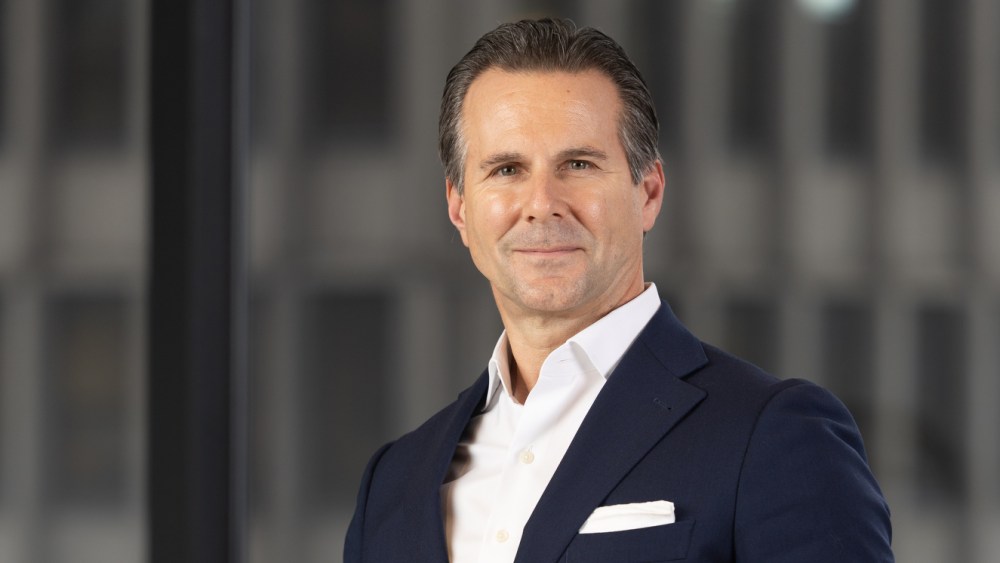
When Justin Boxford steps into the corner office at Capri Holdings on Jan. 4, it will start a new chapter at a company that for 23 years has been shaped by the leadership and vision of John Idol.
As chief executive officer of Capri, Boxford will be taking expertise honed over more than 20 years at the Estée Lauder Cos. and applying it to the Michael Kors turnaround and the Jimmy Choo expansion.
Robin Freestone will become the company’s independent chairman. And Idol, who is currently both chairman and CEO, will stay on as a senior adviser through the end of March.
WWD was first to report late Tuesday that the CEO switch was in the works.
Before Idol heads for the exit — and the golf course — he took a few minutes on Wednesday to talk about the change and what it means for Capri. In the interview, he also took a clear-eyed look back at his run as CEO, finding many things to be proud of and some things that he’d do differently.
“It’s time,” Idol said.
“Our board and myself have been talking about succession planning for years, but this was something that I was very much wanting to do,” he said. “I’ve been a CEO since 1997.
“I’ve had a great opportunity to work with amazing teams of people and to be able to work with Michael as my business partner and to be able to work with Hannah [Colman, CEO of Jimmy Choo] and Sandra Choi [creative director at the shoe brand]. This has been the honor of my career. And now it’s time for me to go spend some more time with my family and also play a little more golf, hopefully get better at it.”

Looking back at his time building Michael Kors up into Capri, Idol said acquiring other brands “probably took our focus off of Michael Kors and Michael Kors did suffer because of that.”
“If I have to reflect back and say, ‘Here’s all the things you’ve done right,’ I’m very proud of what we built and proud of where those brands resonate in consumers’ minds around the world,” he said.
“If I had to do it over again, I think I’d make sure when you’re acquiring brands that you have the right capital and the right focus to not let any of those brands suffer at the extent of trying to drive something else,” the CEO said.
This is try number three at a stepping aside for Idol — and it seems like the one that will stick.
Joshua Schulman was tapped to lead the Michael Kors brand in 2021 and was due to take over from Idol, but that arrangement didn’t last a year. Schulman left and bounced back well, becoming CEO of Burberry.
Then Idol was set to exit when Tapestry Inc. consummated its $8.5 billion deal to buy Capri, but the acquisition was tripped up by antitrust concerns and dropped in 2024.
That left Capri and Idol at a low point in what’s been one of fashion’s most remarkable roller coaster rides.
When he stepped in to become CEO of Michael Kors, it was a designer brand trying to get traction with just $17 million. Idol, with lots of help, professionalized the company, took it public in 2011 and sparked a fresh wave of investor interest in fashion. Two years later, the company’s market capitalization topped out at over $20 billion.
But the market cap is now just $2.2 billion, although the stock is starting to bounce back as Michael Kors stabilizes and tries to follow in the path of Ralph Lauren Inc. and Coach-parent Tapestry Inc. by elevating the brand and driving full-price sales.
Boxford arrives at a moment of change, not just for Capri, but for all of fashion, which is navigating a turbulent world, riled by politics, an affordability crisis and the revolution that is artificial intelligence.
Recalling the board’s deliberations over succession, Idol said: “Whoever comes in and takes this role has to be flexible, dynamic and want to embrace what the next part of the future’s going to be. Justin has that drive and that interest and that curiosity. That’s something that the board was very excited to see in a candidate, that he really embraced that.
“He knows our company,” Idol said. “He knows the way that we work because we have a very founder spirit in our company and he understands that obviously coming from the Estée Lauder Cos.”
In a statement, Boxford described Michael Kors and Jimmy Choo as “iconic luxury houses, with distinct identities and tremendous potential.”
“I look forward to working with Capri’s teams around the world to build on the brands’ strong foundations, deepen connections with consumers and drive sustainable growth and value for our shareholders,” he said.
Boxford is stepping in amid chatter that the company is talking to would-be acquirers about a potential sale, according to sources.
Idol declined to comment on the rumors, but said: “The company has an incredibly bright future in front of it. These are two extraordinary brands and luxury houses, and I think that Justin’s got an opportunity to really grow this company by billions of dollars over the next couple of years.
“The board sees the same thing, that the opportunity is so large that really there’s no need to look at any of those types of things,” he said, referring to the rumored deal talks. “We’ve got a good plan in place and the right team to do it, and we have the capital structure to execute against those initiatives.”

It’s taken some time for Capri to build back.
“The failed transaction with Tapestry created a number of headwinds for the company,” Idol said. “First was the distraction of the management team during that period of time.”
The company also lost a lot of its senior leadership around that time, which the CEO said “created a lot of issues at the company.”
“Over the last two years, we’ve had a very strong group of people joining our company, led in particular by Tyler Reddien, who is our chief financial and chief operating officer and a number of other people,” he said.
Capri also sold Versace to Prada Group for about $1.5 billion, which Idol said “really put our balance sheet in a very good place.”
“We have the financial free cash flow because our company’s profitable again, and we have the strong ability to use our balance sheet to execute on our strategic initiatives,” he said.
“Every brand that is successful in the world has great product and great marketing,” he said. “I don’t care what brand you’re talking about, but just go around and look at them all. There’s brands that are starting up newer, and Alo is a good example. Great product, great marketing. There are brands that are seeing resurgence. Ralph Lauren, great product, great marketing. You always have to start with that.”
Investors watching what happens next at Capri were, at least on Wednesday, taking a wait-and-see approach and trading the stock down 3.9 percent to $20.88.
Simeon Siegel, an analyst at Guggenheim Securities who follows Capri, said it was not a big surprise that Idol was stepping down, having tried to exit before.
“The fact that this announcement is happening right now would appear to suggest that John believes the company is not fully back, but is absolutely back on track,” he said.
“Michael Kors has been underselling and under-earning for some time now,” he said. “Companies need to stabilize well before they can grow, and it looks like the company has been working on stabilization. We have yet to see the signs of growth clearly.”
For Boxford, Siegel said there are “rhyming similarities” between Michael Kors and Estée Lauder “insofar as what they used to be as a brand, what they became as a brand.”
“There’s also clear differences,” he said. “But I believe that Justin’s experience with the Michael Kors fragrance and Michael Kors the person will mean he knows the business better than what we would assume from [another] outsider and knows the company from its glory days, from its recent past and presumably has views on where he can take it in the future.”


