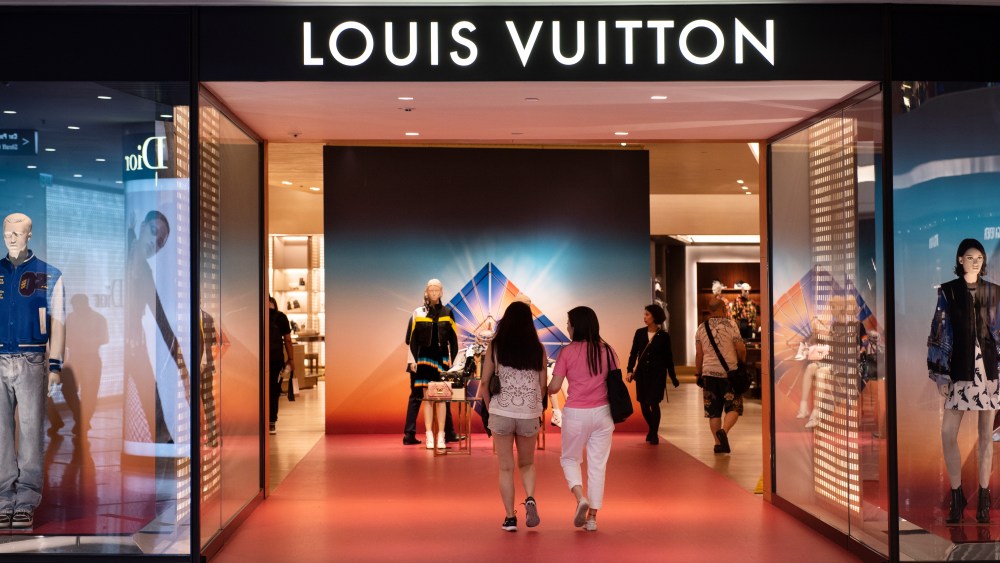
Louis Vuitton is set to close its only store in Guizhou province on Aug. 31, marking the luxury house’s exit from the Southwestern Chinese hub.
The store is located at Lavant Center, a high-end shopping mall in the provincial capital of Guiyang.
“In line with our existing plans and as part of our ongoing commitment to optimizing our retail network and delivering a more innovative and immersive brand experience, Louis Vuitton China Ltd. Guiyang Jianghua Lavant Plaza Store will cease operations on Aug. 31, 2026,” the brand wrote in a notice posted at the store.
Lavant Center was initially launched in 2022 with a splash.
You May Also Like
At the time, Louis Vuitton’s first Guizhou store opened alongside Gucci, Cartier, Balenciaga, Burberry, Versace, Bulgari and more than a dozen other top luxury brands, marking the debut of Guizhou’s first comprehensive luxury shopping destination.
However, as the Chinese market cooled, the mall quickly saw its star-studded luxury lineup unravel. In 2025, the stores for Gucci, Cartier, Tod’s, Burberry and Qeelin ceased operations, followed by those of Balenciaga, Versace, Ami and, most recently, Bulgari.
Rolex, one of the last standing hard luxury brands in the market, has relocated to MixC, the CR Land-owned high-end shopping mall franchise that opened in 2024.
Burberry has also moved to MixC, where it launched a Qixi-themed pop-up. Coach, Tory Burch and Hugo Boss are among the accessible luxury brands with hoardings up at the shopping mall.
Ferragamo and Max Mara still operate stores at Lavant.
The shopping mall, operated by Guiyang’s Xingli Group, was an extension of a historic neighborhood and inspired by the city’s steep cliffs and mountainous landscape.

Guizhou province, once among China’s less-developed regions due in part to its hilly geography, has nevertheless cultivated a distinctive luxury consumer — urban residents’ disposable income reached 52,778 renminbi, or $7,842, in 2025, on par with that of neighboring Chengdu, another luxury hot spot.
Gucci, which opened at another Lavant shopping mall in 2010, became one of the Kering-owned luxury brand’s top-grossing stores in the region, with sales reportedly reaching the highest level in its Asian retail portfolio. Local media reports put annual sales at around 150 million yuan, or $22.2 million, to 200 million yuan, or $29.7 million.
“This is not just a business miracle, but a city’s hidden yearning for the good life,” Lavant wrote in a notice published last August, reminiscing about the mall’s heyday.
Luxury’s retreat from Guiyang reflects a fast-maturing consumer who now shops on different terms.
“People might not be buying pure luxury goods these days, they might be buying stuff from brands like Acne Studios,” said Xi Min, a Guiyang local and creator of the Paris-based fashion label 022397.
A robost high-speed rail network also means local shoppers can easily access luxury retail in Chengdu — around three hours away — and even Hong Kong, which is roughly five hours away by rail.
“There’s a reason why Guiyang is known locally as ‘Little Hong Kong,’ we feel a special affinity to retail culture,” Xi said.
“It’s etched in our genes to spend money on fashionable goods — we are not afraid to try new styles, we enjoy a good life,” added Xi, who recalled seeing his middle school English teacher toting around the most sought-after luxury handbags, some of which were purchased during weekend shopping trips to Hong Kong.
Guiyang’s easygoing lifestyle has ushered in a new era for local retail, one that is centered around cultural heritage and lifestyle.
MixC Guiyang continues to attract accessible luxury players to open their first stores in the city, with recent additions including Polo Ralph Lauren, Vivienne Westwood and Icicle.
Over at Aydc, an experimental retail hub, more than 100 stores, including award-wining roasteries, Shanghainese streetwear brands and skating arenas, continue to draw tourists.
Since last year, luxury brands have begun pulling back from underperforming stores in lower-tier cities, including Guiyang, Taiyuan and Kunming.
The same is true of underperforming shopping malls in China’s first-tier cities. As the country evolves from an emerging growth engine into a mature and increasingly selective market, malls and brands with clear positioning, disciplined execution and strong local relevance are extending their lead, Barclays observed in a recent report.
At Shanghai’s One ITC, the departures of Louis Vuitton, Celine, Tiffany & Co. and Chaumet have left the mall without a mega luxury tenant. At Réel Department Store, Saint Laurent, Balenciaga and Gucci have closed their stores.