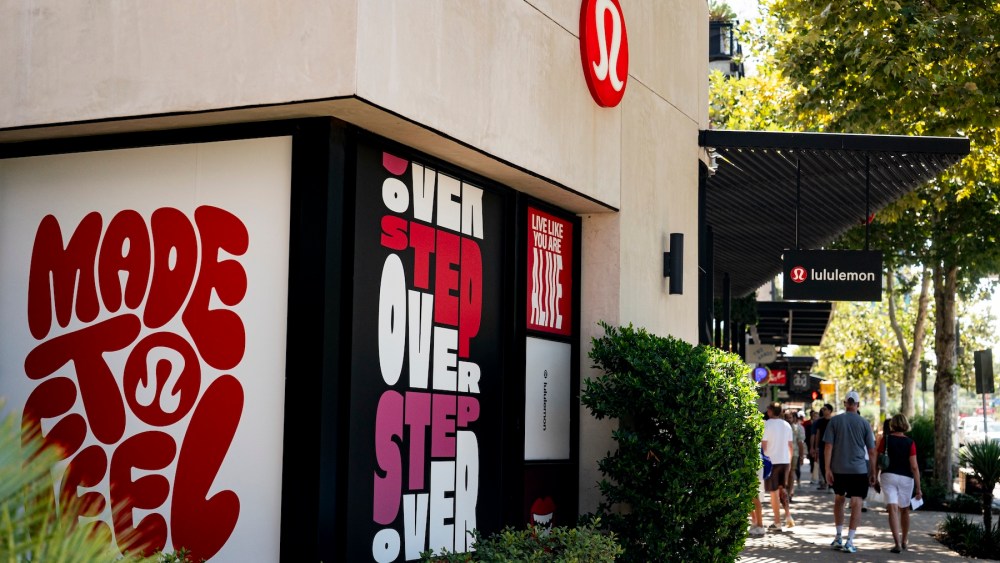
Lululemon Athletica is facing a proposed securities class action lawsuit alleging it overstated the strength of its turnaround and failed to disclose how weakening demand and disappointing product launches were hurting its business.
The suit challenges the company’s disclosures during a year in which its revenue outlook shifted from modest growth to contraction. Lululemon initially forecast annual sales growth of 2-4 percent in March. By September, it was projecting a decline of 5-7 percent.
Shareholder Karol Koronczi filed the lawsuit Nov. 2 in U.S. District Court for the District of New Jersey against Lululemon, its chief financial officer Meghan Frank and its president and chief commercial officer André Maestrini. Frank and Maestrini served as interim co-CEOs during the period covered by the suit.
The proposed class includes investors who purchased or otherwise acquired Lululemon securities between March 18 and Sept. 3, 2026.
According to a summary of the complaint published by law firm Pomerantz, the defendants failed to adequately disclose deteriorating store traffic and product demand tied to negative media and social media commentary and new launches that performed below expectations. The suit alleges they understated those problems while overstating the strength of the business and its turnaround plan, particularly in North America and mainland China.
The plaintiff contends those conditions made the company’s financial guidance unrealistic and its public statements materially misleading, according to the firm’s summary.
Lululemon did not respond to Sourcing Journal’s request for comment on the lawsuit by press time.
Lululemon’s March 17 earnings release projected fiscal 2026 revenue of $11.35 billion to $11.5 billion. Management identified improving full-price sales, particularly in North America, as a priority and said it was encouraged by the initial response to recent product launches.
The company lowered that forecast on June 4 to $11 billion to $11.15 billion, roughly flat sales or a 1 percent decline. First-quarter revenue had increased 4 percent to $2.5 billion, but Americas revenue fell 3 percent. Gross margin contracted 4.1 percentage points to 54.2 percent.
“More recently, we have been navigating headwinds that have led us to adjust our outlook for the full year,” Frank said in that earnings release.
Shares fell 8.6 percent the following day, according to the investor notices.
The September results brought another reduction. Lululemon reported second-quarter revenue of $2.4 billion, down 4 percent, and a 9 percent decline in comparable sales. Adjusted for currency fluctuations, comparable sales fell 10 percent. In the Americas, comparable sales declined 12 percent.
The company cut its annual revenue forecast to $10.35 billion to $10.5 billion. In the earnings announcement, Frank said Lululemon was working to strengthen its product offering, increase marketing investment and manage expenses.
Shares fell 17.4 percent Sept. 4 to close at $100.61, according to the notices. The suit seeks damages under federal securities laws.
The new case follows a separate securities class action filed in New York in 2024 over alleged misstatements concerning Lululemon’s business, product offerings and inventory allocation. In its September quarterly filing, Lululemon disclosed that a judge had allowed part of that earlier case to proceed and said it intended to defend that action vigorously.
Meanwhile, the retailer has reorganized its leadership under CEO Heidi O’Neill. In October, it named Maggie Gauger president and chief product officer and Joseph Godsey chief operating officer, effective Oct. 26. Chief supply chain officer Ted Dagnese and chief brand and product activation officer Nikki Neuburger are scheduled to depart Nov. 6.
“Lululemon is a rare, extraordinary brand, but we have work to do to build a stronger and more competitive company,” O’Neill said in the Oct. 7 announcement.