
The textile sector is under pressure from every direction. Market volatility is reshaping sourcing decisions in real time. The European Union’s Ecodesign for Sustainable Products Regulation is moving from policy document to business reality. Due diligence legislation is forcing brands to look harder at their supply chains, including the parts they have historically treated as invisible. And across the industry, the years of broad sustainability pledges are giving way to harder questions: what have you done, and who can prove it?
Organic cotton has answers to some of those questions. It is not an easy solution. It asks more of farmers, more of brands, and more of supply chains than most sustainability strategies do. But it is one of the few approaches in this sector that has been tested, refined, and proven to work at the farm level, over decades, across different geographies. The bigger question today is no longer whether organic cotton works. It is whether the industry is prepared to build the systems that allow it to scale. Farmers, brands, manufacturers, investors, policymakers, and standards organisations arrived with different priorities. They left with a remarkably similar diagnosis: the technical knowledge exists. The barriers are commercial.
Farmers are the foundation, yet they continue to be overlooked
Suzana Aguiar is a fifth-generation cotton grower from a semi-arid region of Brazil. She doesn’t use irrigation. She intercrops. She has spent her life learning to work with the conditions rather than against them. “Cotton helps us bring back dignity and income,” she said.
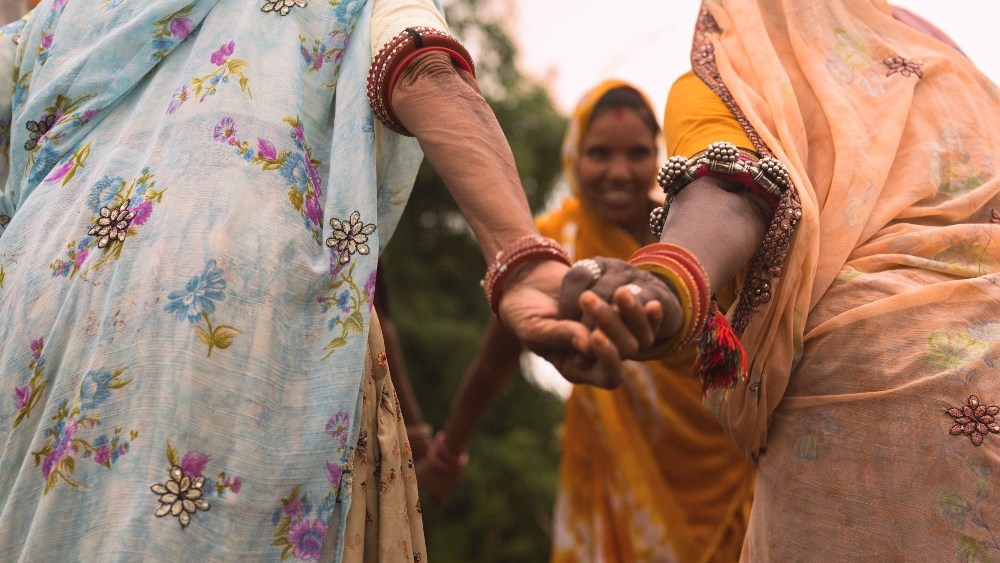
Gavara Katara, from Madhya Pradesh, has replaced chemical inputs with organic ones she makes herself. Her costs are lower. Her family income has grown. Her children are going to school, and she expect they will carry her legacy by farming better than she did. Ibrahim, from Türkiye ‘s Aegean region, was direct about what stops farmers from converting: they need to know what income they will have. Not eventually, but before they make the decision to switch to organic.
These are not isolated stories. They illustrate a system. Organic cotton works when farmers are supported with knowledge, stable markets, fair prices, and continuity. It stops working when any of those elements disappear.
“For too long, too much of the risk has sat with farmers,” says Bart Vollaard, executive director of Organic Cotton Accelerator. “If we are serious about building resilient organic cotton systems, the industry needs to commit to more than supporting agronomic training alone.” Farmers also need commercial certainty, reliable buyers and long-term demand. The challenge is no longer proving that organic cotton can work. It is creating the market conditions that allow many more farmers to succeed.
The start-stop problem
Dr. Başak Egesel, head of the Good Agricultural Practices and Organic Agriculture Department at Türkiye’s Ministry of Agriculture and Forestry described a project in the Aydın region of the country, where 122 farmers across 3000 hectares were trained in organic cotton production over three years. Then the programme ended. Without buyers who had committed to sourcing that cotton over time, the work didn’t stick.
This pattern is not unique to Türkiye. It is one of the defining bottlenecks of how the organic cotton sector has operated. Brands arrive, projects launch, training happens, and then sourcing priorities shift and the investment evaporates. The farmers are left to absorb the cost of a transition that served someone else’s agenda.
Ashley Gill, chief standards officer at Textile Exchange, sees the same dynamic across producing regions. The projects that endure, she argues, are the ones designed around producers from the outset, with buyers prepared to stay engaged beyond the initial investment. “Scaling happens when people are committed to staying in for the long haul, not when they dip in and out.” For Gill, continuity is not an optional extra. It is what determines whether projects become lasting change.
The urgency here is not abstract. Farming communities across producing regions are watching the next generation weigh up whether organic agriculture, or even farming at all, is worth committing to. If the answer keeps being “not without income certainty,” the pipeline of future organic farmers shrinks. The question of what the safety net looks like for producers came up repeatedly across the Summit’s regional conversations, from India to Pakistan to East Africa. The answer is not the same in each place. But the underlying need is identical.
What must change, and who has to do it
The sector already knows where the problems lie. The challenge is acting differently.
For brands, that means treating organic cotton as a long-term sourcing strategy rather than a premium product to buy when market conditions allow. Farmers cannot invest in multi-year transitions if demand disappears with the next procurement cycle. As Tobias Meier of Fairtrade International said in Istanbul: “There’s no such thing as cost-neutral sustainability.”
For policymakers, the opportunity is different. The EU’s regulatory agenda, including ESPR and the push for sustainably sourced renewable materials to be recognised in eco-design requirements, could create stronger incentives for organic cotton. But only if the sector makes the case clearly. Without coherent policy recognition, as Textile Exchange’s policy lead, Romane Malysza, put it, there is a risk of missing a genuine opportunity for positive impact. Organic cotton needs to be named, not just implied, in the frameworks that will direct investment over the next decade. Vollaard believes policy represents one of the sector’s biggest untapped opportunities. To date, organic cotton has expanded largely because businesses chose to invest in it. Public policy has rarely provided comparable support. “It would be transformative if policymakers actively started supporting organic cotton production and uptake,” he says. “That shift hasn’t happened yet.” As new EU rules reshape how sustainability is measured, there is an opportunity to change that.
And collaboration has to be structural, not occasional. Bringing together farmers, suppliers, brands, and investors from across the globe actually builds the relationships that make things move. “Convening the industry around the same table is not a nice-to-have,” Vollaard said. “It is part of the infrastructure.”
No silver bullet, but no excuse for waiting
Gill is sceptical of the search for a single breakthrough. “There isn’t going to be one thing that solves this,” she says. “We’re all solving smaller pieces, and change is going to happen in bursts, and in slower moments too.” The lesson, she argues, is not to wait for the perfect intervention. It is to commit to practical actions that reinforce one another over time.
Ibrahim’s question still stands. Farmers should know how much they will make. Until the sector can answer that question reliably, at scale, and across regions, everything else is preparation.
Why convening still matters
None of this happens without the people willing to show up. OCA and Textile Exchange brought together over 250 industry leaders earlier this summer in Istanbul. What they created was something the organic cotton community has needed for a long time: a genuinely global forum, not a regional one. Farmers, brands, investors, and advocates from the US, Brazil, Tanzania, India, Pakistan, and Türkiye in the same room, having the same conversations. Around 46 percent of attendees came from outside Türkiye. That shift is not a footnote. It is a signal that the conversation is widening.
Vollaard was candid about what it meant to him. “What moved me was hearing from people at every stage of the journey. The veterans, the pioneers who’ve been in organic cotton for decades, and the new faces arriving with fresh energy. That mix is what I wanted this to be. And the partnership with Textile Exchange made it possible.”
The community is there. The next step is making sure the commitments made outlast the conversations that sparked them.
Bart Vollaard is the executive director of the Organic Cotton Accelerator (OCA), leading the organisation’s strategic development since 2019. With over a decade of experience in international sustainability programmes across agriculture and commodity supply chains, Bart has been shaping OCA from the very beginning, joining as program director in 2016.
Ashley Gill grew up on a cotton farm in Texas and served as an agroforestry Peace Corps volunteer in rural West Africa before joining Textile Exchange in 2010. Since then, she has held a range of roles across the organization, spending the majority of her time as part of the Standards System team. There, she launched the first International Working Group for the Global Recycled Standard (GRS) and led the development of the Recycled Claim Standard (RCS), GRS, and Responsible Down Standard (RDS), before becoming director of standards in 2019. Promoted to senior director in 2021, Ashley spearheaded the initiative that is now the Materials Matter Standard. In August 2025, Ashley was appointed as chief standards and strategy officer.