With 50 percent tariffs on Canadian goods announced on Saturday that include a multitude of apparel products, consumers are bound to feel the impacts of the United States-Canada trade war when browsing for outerwear this fall.
That’s according to University of Delaware professor of fashion and apparel studies Dr. Sheng Lu, who looked at product-level data across hundreds of thousands of garments labeled “Made in Canada” following this week’s news. Nearly 36 percent of evaluated items fell into the outerwear category encompassing coats, jackets and blazers.
U.S. retailers that carry these products include premium department stores like Neiman Marcus, Bloomingdale’s and Saks Fifth Avenue. “In terms of specialty stores and off-price retail, the impact seems to be more limited,” he said.
What does this mean for the upcoming fall selling season? In Lu’s estimation, consumers can still expect to see Canadian coats on the racks at retail. “Brands and retailers placed these orders quite a few months ago, as early as last year, and I don’t think they will necessarily choose to cancel existing orders,” he said.
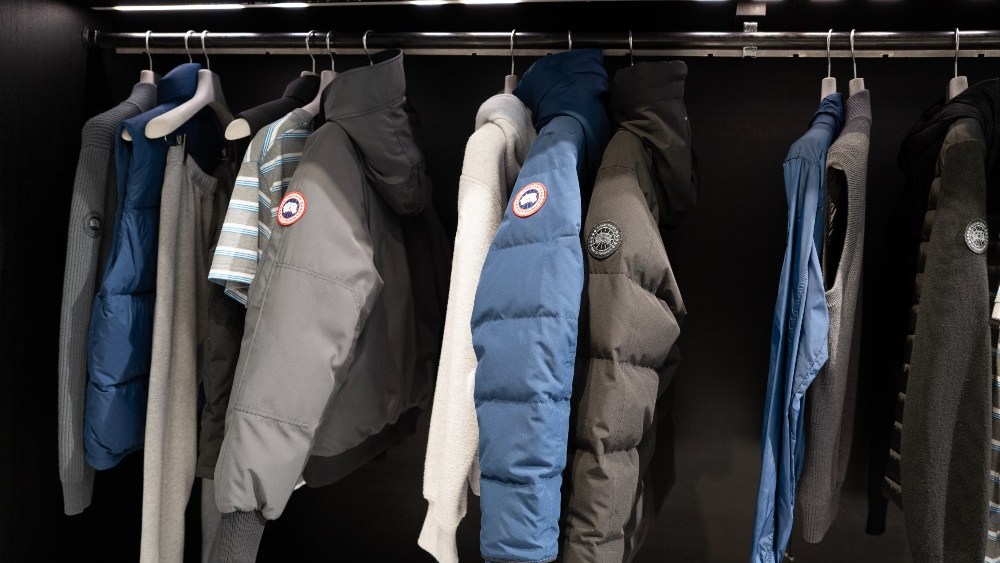
For one, many of the items coming to stores this fall will be seasonal outerwear with a relatively short sell-through cycle. Secondly, the flexibility surrounding order of products from premium Canadian brands (a la Canada Goose) is more constrained than goods like T-shirts, for example. Outerwear and performance brands like Kanuk, Moose Knuckles and Quartz Co. also produce in Canada.
If prices rise in an Asian sourcing locale producing mass-market goods, there are many other markets that create analogous products, Lu said, but it’s unlikely that brands sourcing specialized products from Canada have the option to make such a shift or cancel orders this late in the game.
With that reality as a backdrop, Lu believes that retailers will employ “a mix of measures” to mitigate the impacts of the new tariffs, including absorbing some of the additional costs themselves. “With Canada as a sourcing base, the product is so specific and there’s no immediate alternative out there. This also means that the price elasticity could be relatively low,” he said.
Inevitably, some will have to pass price increases on to consumers given the degree of the tariff burden. “Whether [the product] complies with USMCA or not, it’s a substantial cost increase, and these are more expensive products,” he said. Under the new trade action, outerwear as a category will face the full 50 percent tariff rate.
The long-term impacts of the Trump administration’s tariff rate increase will far surpass the sticker stock likely to be experienced by shoppers this fall and winter, however.
The state of U.S.-Canada relations, especially regarding the renegotiation of the U.S.-Mexico-Canada Agreement, are in a “concerning phase,” Lu said. “We thought there was unanimous support for the renewal of this agreement, but it didn’t happen” in July when the formal six-year review took place. “Instead, the Trump administration plans to have an annual review, and that comes with additional procedures,” he said, from federal register announcements to the solicitation of public comments and hearings.
Should that cumbersome process take place annually without a resolution until the agreement expires in 2036, there will be little incentive for companies on either side of the border to invest in sourcing in the meantime, he said. “Now we have a bilateral trade dispute that raises a bigger concern about whether the Trump administration is committed to keeping USMCA as a trilateral agreement” or whether North American free trade will remain fractured moving forward.
The developments of the past week raise “significant concerns” about “the bigger framework” for U.S. trade relationships, Lu said.
The rest of the world is watching the crumbling of America’s economic relationship with its closest trading partner, and an administration that is calling into question the sanctity of free trade agreements generally.
“China will watch this very carefully,” Lu added. Chinese President Xi Jinping is scheduled to visit Trump in Washington next month, and trade and tariffs are no doubt on the docket for discussion. China’s leader is perhaps thinking, “If Canada has run into a trade war with the U.S., how about me? I’m having even more complicated issues with the U.S.,” Lu said. Trade between the countries plummeted to historic lows last year, and the relationship hasn’t seen any forward progress in 2026.
Economies across the globe are watching the dispute between North American neighbors for signs of what’s next—and what they can expect when they come to the negotiating table with the U.S. “The ripple effect of uncertainty will be felt by all trading partners around the world, and it will be much more challenging for the U.S. to build trust with its trading partners in the long run,” Lu surmised.