Raspberry AI, an agentic solution provider, has announced Wednesday the launch of an expansion of its platform that aims to bring “the entire fashion product lifecycle into one AI-powered agentic workflow.”
In what it describes as a fashion industry first, Raspberry AI said it is unifying AI agents across design, merchandising, wholesale, marketing and e-commerce, “creating an entirely new path from initial concept to commerce—and transforming how brands bring products to life in the physical world,” the company said in a statement.
It is a bold move since the fashion industry has struggled with bringing physical products to the market in a cost-efficient and low-labor way. Launching a product requires many steps and an endless number of handoffs. This includes trend research and sketching as well as material selection. Then there’s sampling and fittings, as well as revisions—not to mention getting approvals, production and photography.
“With an estimated 40 percent of apparel inventory going unsold each year as brands struggle to respond quickly to consumer demand, the industry needs a fundamentally new approach,” Raspberry AI said in a statement, noting that it is changing that model. “For the first time, its platform not only digitizes many of these processes, but connects them in one continuous workflow, enabling teams to move seamlessly from consumer and market intelligence and trend research through design, technical design, merchandising, wholesale, marketing and e-commerce.”
“Consumers today shop in an on-demand world, where tastes change rapidly and inspiration can become demand overnight,” said Cheryl Liu, CEO and founder of Raspberry AI. Liu said consumers shop in an on-demand world, where tastes and inspirations change rapidly. “Yet the process of bringing a product to market is still built around physical sampling, disconnected teams and timelines measured in seasons,” Liu said. ”AI is changing what’s possible, allowing brands to move from a consumer insight or a spark of inspiration to a finished collection in days, not seasons.”
The company said a team of fashion designers, merchandisers and marketers built the platform alongside experts from Google, Meta and Stanford, who collectively built the first AI agent specifically for fashion.
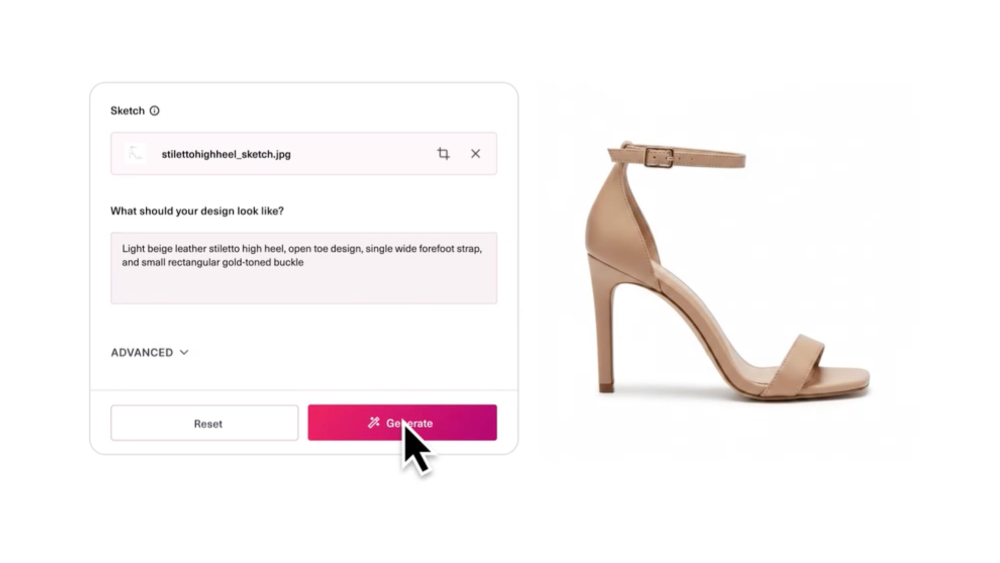
And the platform is easy to use. The company said users might start with a prompt such as “Create a men’s denim collection for Fall 2027.” Raspberry then helps turn that initial idea into a collection while keeping people in control at every stage. “Designers, merchandisers and marketers bring their expertise and creative judgment throughout the process, guiding the agent, reviewing its work and shaping each design as it evolves,” the company said, adding that users can pull in trends and consumer insights, “build mood boards, explore fabrics from their own libraries, develop and iterate unique designs, generate production-ready technical designs and visualize complete assortments on-model.”
Raspberry said those same products can then become lookbooks and wholesale presentations as well as be used for campaign creative and product detail pages, among other uses. But there is more.
The company said the platform’s capabilities extend from trend and consumer intelligence into color direction as well. For the NYFW Spring/Summer 2027 season, Pantone is partnering with Raspberry AI on a series of AI-generated materials and mood boards inspired by the Pantone Fashion Color Trend Report. “Using Raspberry AI, the teams translated Pantone Color Institute’s seasonal color and trend direction into visual explorations across fabrics, textures, silhouettes and styling, demonstrating how each featured color could come to life in the real world,” the company stated.
In another case study, Nancy Green, CEO of Beyond Yoga, said her company’s growth has been fueled by its ability “to stay deeply connected to our community while bringing thoughtful product to market with greater speed and agility.”
“Technology is an important enabler, helping our teams make faster, more informed decisions across the product creation process,” Green said. “Raspberry AI is helping us unlock new efficiencies and accelerate creativity within our development and selling process, allowing us to focus on what matters most: delivering premium, relevant products and human experiences that resonate.”
Aside from Beyond Yoga, the company counts among its clients brands such as Skims, Alo and Savage X Fenty, along with Oscar de la Renta, Walmart, TJX, Columbia, Claire’s, Steve Madden, Tapestry Group, Lilly Pulitzer, Roller Rabbit, Rag & Bone, Adrianna Papell, Polo South Africa and Delsey Paris, among others.
Liu told Sourcing Journal that 70 percent of its active customers now use Raspberry across three or more departments, which is up from 30 percent in April. The CEO said another customer expanded from a 20-seat pilot of the platform and one division to 170 seats and a 16-month contract across eight business units.
“Centric Brands started with six users just in their kids accessories department in October 2024 and have now expanded to almost 200 seats with us across seven divisions in just two years,” Liu said. “A Fortune 100 company that is the leading off-price retailer of apparel and home fashions in the U.S. and worldwide expanded from 10 seats in their pilot with one division to about 100 seats across five divisions.”
When asked why a company might hold back from scaling a successful AI pilot project, Liu said that if a company isn’t ready to adopt AI, “they often have the wrong people aligned to the project who aren’t able to drive change forward across the whole company.”
“What makes Raspberry different versus other competitors is really our people and the partnership we offer to our customers,” Liu said. “We are a dedicated solution provider to them and help brands across their entire end-to-end process.”