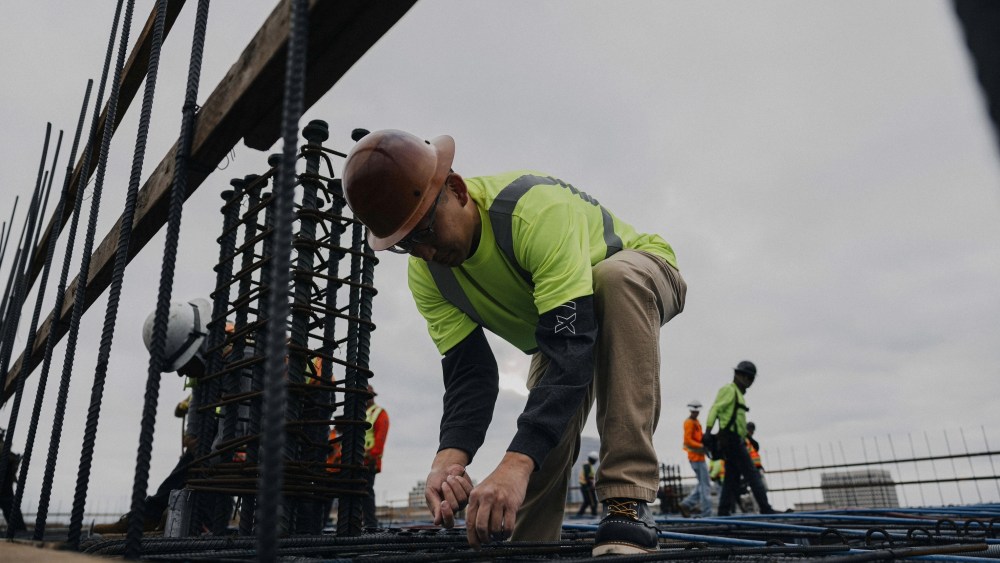
With every step on a jobsite, blue-collar workers face an inevitable challenge: the integrity of their work gear. Whether it’s a boot’s outsole peeling away from the upper or the tread of the outsole wearing smooth from strenuous wear in high-friction environments, they face a familiar inconvenience. To replace their work boots, workers need to find a location that accepts their vouchers and time to visit the retailer to purchase.
Safety managers face different challenges. With rapid company growth and hiring surges, a safety manager needs to outfit newly hired employees en masse with proper safety gear quickly while staying in budget and accounting for every purchase. Any delay in moving quickly impacts worker safety and company profit.
In major blue-collar industries across the nation, work boots and workwear are more than a uniform. They’re essential tools that keep workers safe and day-to-day operations running smoothly. Yet, getting the right gear to the workers who need it is a complex process for both the business and the employee.
This problem is no industry secret and not all workwear brands are equipped to solve it. In search of the right solution, businesses are grappling with gaps in retail access, scaling difficulties, limited brand selection and a lack of digital management tools.
In response, one heritage workwear brand is stepping up to combat these longstanding supply challenges.
Boot Barn has set out to make work gear supply more seamless by addressing some of the common roadblocks that make the process consistently difficult. The largest Western and workwear retailer in the nation has recently overhauled their B2B commercial accounts program, Boot Barn Workforce, which is rolling out nationwide this fall. Leading these efforts is Tim Farrell, program director and a workwear safety professional with 18 years of industry experience.
“Outfitting an entire workforce can be time-consuming and difficult,” said Farrell. “Our goal is to make supplying key safety gear as quick and easy as possible for workforces across the country.”

First, Boot Barn is tackling the problem of access. Even in an increasingly digital world, physical retail earns its place in safety footwear. Choosing the right work boot is never a simple case of point-and-click. Fit and feel are crucial, and sizing varies greatly, so it’s helpful to have easy access to physical stores where employees can compare fit and get expert assistance.
With more than 575 stores across 49 states, Boot Barn extends its in-store experience across a broad geographic footprint. They also bring that in-person experience to the job site with mobile boot trucks and pop-ups. For workers who have demanding schedules, bringing the store directly to them offers priceless convenience.
“On-site, the crew can try on different options and ask questions about specific safety features,” Farrell explained. “Then they can take their boots home, or we can place any online orders all in one go.”
While a national store network addresses one aspect of the access problem, online access is still important. Boot Barn supports their in-store and on-site experience with e-commerce, allowing businesses to shop their inventory online with fast fulfillment, with a buy-online, pick-up-in-store service that connects the digital experience to their physical stores.
Kasey Bryant, Boot Barn Workforce customer and terminal safety manager at Port Houston, appreciates the flexibility that this hybrid in-store and online program offers. “We use a combination of in-store boot vouchers and the online ordering platform, offering proper fit, convenience and a quick turnaround for our employees,” he said.

Once businesses have physical and online access to work gear, breadth of choice is next on the list. Choice carries a lot of weight in a category where brand loyalty is strong. As a large multibrand retailer, Boot Barn offers a broad selection of top work brands across a wide range of price points.
“Our customers are deeply loyal to the brands they respect and have used for years,” Farrell said. “If an employer only offers a brand that you’ve had a poor experience with or has never fit well, it can be a sore point.”
Breadth of choice applies to more than brand selection. Businesses are also looking for a wide assortment of industry-specific workwear options.
“The work gear needs in agriculture are very different from those of construction,” Farrell said. “We carry safety-toe boots, FR, hi-vis and all-weather workwear so we can be that one-stop shop for every type of business.”
Access and choice are key, but for safety professionals who are managing hundreds or thousands of workers, those benefits also need to come with an organized, effective way to manage budgets, track orders and monitor deliveries.

Boot Barn’s answer has been to custom-build a new digital experience to support their program.
“This is the part we’re most excited about,” said Farrell. “We’ve developed a streamlined digital portal that allows workforces to order, track and manage their workwear programs easily.”
Boot Barn’s new experience combines personalized ordering with one centralized system to manage and track their program. It also has an employee-facing version, so workers can place and track orders with their company’s discounts, vouchers or allowance already applied.
“It keeps track of all the costs for each employee. That is a huge win for me,” said Deanna Green, Boot Barn Workforce customer and team member at Diamond Oil & Gas.
Solving the supply challenge is more complex than sourcing the right work gear. The gear needs to come with quality, access, convenience and the tools to manage the process efficiently as operations grow.
Boot Barn is addressing each of these needs by bringing together their nationwide retail network, broad workwear selection and digital tools built to simplify supply for both businesses and their employees.
“Our customers are looking for a reliable, all-in-one solution, bringing digital together with brick-and-mortar for a program that can scale as they grow. This industry is changing rapidly and we’re ready to adapt with it,” concluded Farrell.
This article was supplied by Boot Barn.