Two days of hearings with supply chain stakeholders and human rights advocates took place in Washington this week as the Office of the United States Trade Representative’s accelerated Section 301 investigation into alleged unfair trade practices by dozens of U.S. trading partners got underway.
The USTR is probing the purported failures of 60 countries to enforce bans on imported goods produced with forced labor. Another Section 301 investigation related to industrial excess capacity, also launched in March, will see similar public hearings next week. The Trump administration, which saw its preeminent tariff strategy dismantled in February, swiftly pivoted to launching the investigations—using the well-established statute, a part of the Trade Act of 1974—with the aim of dinging foreign trading partners with harsh new duties.
The forced-labor investigations span major textile and apparel sourcing hubs across the globe. China, of course, is the primary target, but Bangladesh, Cambodia, India, Indonesia, Vietnam, Pakistan, Sri Lanka, Thailand, Turkey and Mexico are all under USTR scrutiny, with Ambassador Jamieson Greer saying their governments have failed to impose and effectively enforce measures that would preclude products made with forced labor from entering their markets.
At Tuesday and Wednesday’s hearings, 60 witnesses were called to testify on the issue of forced labor in global supply chains, and to speak to whether trade partners’ failure to address such human rights abuses undercuts U.S. commerce—the idea being that using cheap, unregulated labor places domestic producers that pay living wages and meet labor standards at a disadvantage.
While the wish to eradicate forced labor in global supply chains is basically universal (and bipartisan), stakeholders espoused differing views on the role that tariffs should play in achieving the goal.
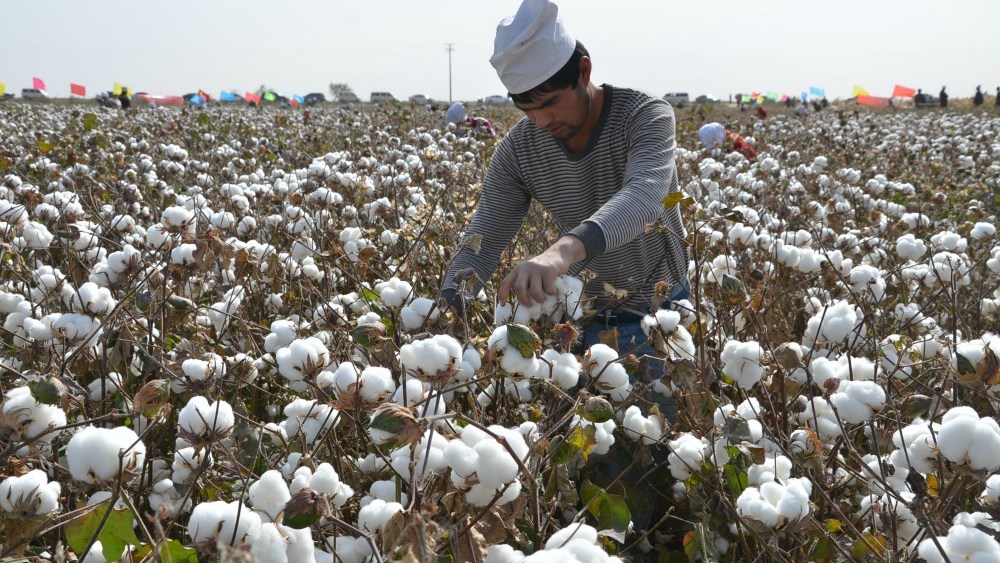
“This exploitation sits at the center of global supply chains,” testified Samir Goswami, director of forced labor programs at Global Rights Compliance. He was referring to China, which he said “has significantly expanded the exploration, mining, processing, and manufacturing of critical minerals in the Xinjiang Uyghur Autonomous Region, relying in part on state-imposed forced labor transfer programs targeting Uyghurs and other Turkic groups.”
The international law foundation’s research showed that the impacts of the abuse are pervasive and “deeply embedded across supply chains.” A multitude of companies operate in the region, and the materials, like minerals, produced there “flow into downstream manufacturing globally, ultimately reaching consumer and industrial markets in many of our trading partners,” he said.
Goswami centered his testimony on what he perceives as the failures of the European Union and the United Kingdom to enact substantive and effective prevention measures. The U.K.’s Modern Slavery Act requires companies to report on their efforts but it doesn’t explicitly prohibit the importation of goods made with forced labor. The EU’s Forced Labour Regulation takes the important step of prohibiting such imports, but it won’t be fully applied until next year.
These “shortcomings” have major impacts on U.S. businesses and commerce. U.S. companies are held to higher standards of compliance, impacting their ability to compete with countries that don’t protect workers, and not addressing the issue guarantees that there’s still a market for illicit goods.
“I think we need to see from our major trading partners across the globe, especially the U.K. and the EU, very strong import bans that are backed up by resources, training, infrastructure, clear definitions of what state-imposed forced labor is—and a common understanding and political will that all of these trading partners will be enforcing these bans to their fullest,” he told Sourcing Journal.
There’s also the issue of transshipment, he added. Right now much of the evidence is anecdotal, because, of course, it’s an illegal practice in the U.S. “I think there’s more research coming around this, where it does show that raw materials that are assembled in Vietnam or Cambodia or other Southeast Asian countries are originating from places that have poor labor practices, and can be packaged and moved out to the U.S.,” he said.
“Certainly, if you look at import/export data, it does indicate that all of a sudden, imports from China to Vietnam increased, and exports from Vietnam to the to the U.S. increased, so trade data supports this as well,” he added.
Asked whether he believes the Trump administration sees these Section 301 probes as a real way to address the issue of forced labor, or as a cudgel to wield in trade negotiations, Goswami said, “I think both things can be true at the same time.”
“I think the Trump administration is focusing on trade and bilateral trade in many aspects of their plans for… American economic development, and it has deemed that it is this is a lever that it can also use to level the playing field,” he added. Forced labor amounts to an “artificial subsidy,” in that countries that employ it have an economic leg up on their competitors that comply with the laws.
But are Section 301 investigations the right way to address that? “I think that the hearings that happened this week by the USTR are a good step in… pushing for action on those conversations, but I think a lot will depend on the follow up,” he said. “How are we going to hold our trading partners accountable to make sure that they are not indeed flooding markets with forced labor made goods?”
Speaking on behalf of the Joint Association Forced Labor Working Group, American Apparel and Footwear Association executive vice president Nate Herman answered that question, saying new tariffs aren’t the way to curb forced labor.
The group, whose members and constituent associations represent “thousands of members, and tens of millions of American workers” across dozens of industries, sources from and sells to many of the 60 countries targeted by the Section 301 investigation.
As its name would suggest, the collective’s stance on the unacceptability of forced labor is “unequivocal,” Herman said—but should this investigation yield stiff penalties for foreign trade partners in the form of duties, it could harm American businesses. New tariffs “would be counterproductive, legally unwarranted, and harmful to the very U.S. commerce that Section 301 is designed to protect,” he added.
JFLWG’s stance is that the Section 301 statute denotes an economy-specific analysis—meaning that investigating 60 separate countries can’t yield the individualized findings required under the law.
Secondly, Herman argued, the absence of one specific mechanism—in this case, a forced labor import ban—doesn’t indicate or affirm that forced labor is being utilized to produce products, or that those products are entering the U.S. and undermining commerce. Such evidence is required for action under Section 301, and forgoing it “would set a precedent that any economy lacking a carbon copy of U.S. enforcement policy is per se ‘unreasonable,’ a standard wholly unsupported by the Section 301 statute,” he said.
Many of the nations being investigated have taken decisive actions against forced labor in supply chains, he added, either through explicit import regulations, domestic forced labor prohibitions, participation in global programs to combat forced labor, and through trade negotiations with the U.S.
“As a result, if this investigation leads to tariff actions, it would do nothing to address forced labor,” Herman said. “Instead, good actors that have already invested heavily in forced-labor compliance would face increased compliance costs, with no benefit, while bad actors would benefit by sourcing from lower-cost alternatives in regions with less oversight.”