Following Nike Inc.’s top leadership changes in China, BTIG analyst Robert Drbul is optimistic about the firm’s strategic approach to the region.
Nike a week ago named Cathy Sparks the new vice president and general manager of Nike’s Greater China region. A 25-year Nike veteran who was recently vice president and general manager of APLA (Asia Pacific and Latin America), where she drove consumer-led growth, Sparks will take over from longtime leader Angela Dong, who is leaving the company, effective March 31.
Taking Sparks’ place as interim vice president and general manager of APLA is Cristin “Crissy” Campbell, currently vice president of Nike brand for APLA. A 15-year-plus veteran of Nike, with eight of those years in APLA across a range of business roles, Campbell will join the senior leadership team.
You May Also Like
Drbul noted that the Greater China market is an important for both the brand and its investors.
“All things considered, we do see a path back in this important market. Nike needs to drive differentiation through Sport and needs to lead with more innovation. This is true in China and almost in every geographic region,” Drbul wrote in a research note. “Nike needs to create greater brand distinction, which is the path to a recovery in Greater China.”
He noted that Nike believes that the Chinese consumer will respond to product that’s both innovative and related to sports performance. “When Nike puts this type of product into the marketplace and tells compelling [and] more localized stories around that product, it can compete,” the BTIG analyst concluded.
Drbul said that product, brand and marketplace are the elements of when a business is working. While Nike doesn’t have those fundamentals in place in China, it is repositioning the brand and making localized investments, as well as elevating its retail marketing, he noted. And while Nike understands what the challenges have been in China and what it needs to do to get back on track, it hasn’t been doing it either at scale or with consistency, the analyst observed.
“This will involve Nike being much more surgical around the assortment of the product and being in the path of that consumer both physically and digitally,” Drbul said. He said that on the digital front, Nike is not currently in front of that consumer in a meaningful way.
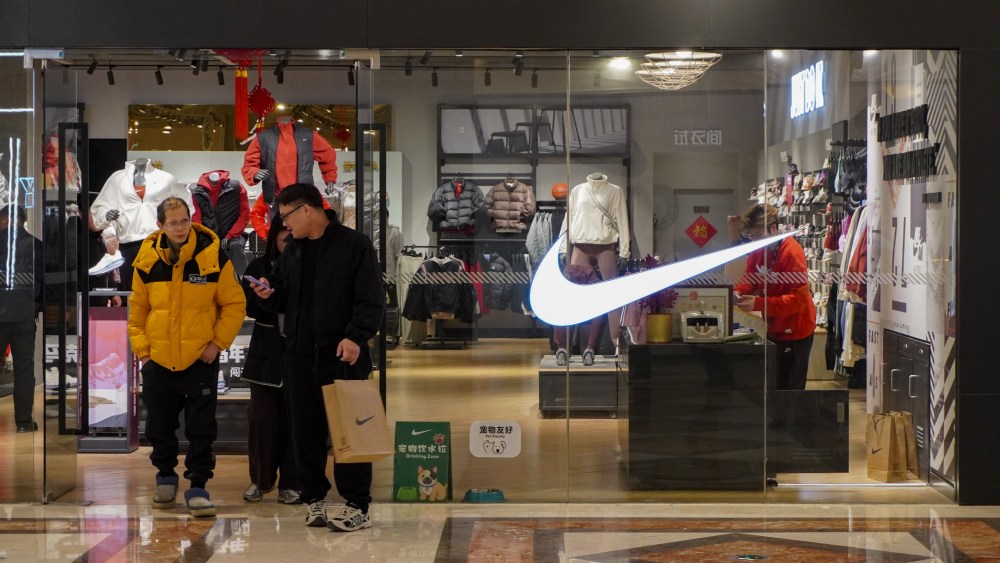
The BTIG analyst also had some thoughts about Nike’s store fleet in China, which he describes as “dated and stale” relative to the competition. Currently, Nike is a lifestyle brand competing on price. It’s China stores have an over-concentration in lifestyle and its Classics product, while its stores and digital presence compete against both the backdrop of rising domestic brands as well as “more intentionally localized strategies from multinational competitors.”
Drbul said Nike needs a clear distinction at retail, an area that now seems to be a key point of focus. Nike has since reduced promotional activity and written off the inventory it took back from its 5,000 mono-brand store partners. This action bars store partners from buying inventory that they now own and then sell on their digital platforms at a higher promotional level than what Nike was offering in its stores. By taking down supply, reducing sell-in plans for spring and cutting buys for summer, Nike is improving its inventory management and can benefit from improved sell-through and full-price realization.
“The company has been implementing the ‘Win Now’ actions in key cities in Beijing and Shanghai [and] leading with more storytelling of its product innovations, editing assortments, and elevating the presentation of its [merchandise mix] in targeted doors,” Drbul said. “We believe that these store pilots in key cities have resulted in good feedback. The next step is to roll out those concepts at a much broader scale, which it is aggressively doing in [the first half of ’26].”
Drbul said the final piece of the puzzle centers on investment in new local capabilities. Some elements are in place but not all, and the analyst said the leadership change in Greater China likely will “lead this change into the future.”
The benefits probably won’t be in Fiscal Year 2026, with Fiscal Year 2027 more likely. “We expect to see some investment in local capabilities to better position Nike to compete with newness, as competitors are bringing newness and increasing the rate at which new products are brought into the marketplace,” Drbul concluded.
Separately, the analyst sees a large commercial opportunity for Nike around the World Cup, with games played in the U.S., as well as Mexico and Canada. He sees this as a “catalyst for sales and profits in soccer footwear, apparel and equipment categories.”
Drbul is also expecting innovation in global football boots from Nike. The brand had reset its Tiempo last year and upgrades are expected for Mercurial heading into the World Cup event.
Separately, as part of its ‘Win Now’ strategy, as outlined in Nike’s third quarter earnings call in March, the company on Monday took steps to strengthen and streamline operations that included cutting 775 jobs as the Swoosh consolidated its U.S. distribution center operations across facilities in Tennessee and Mississippi.