Nearly one year after Caleres Inc. completed the acquisition of Stuart Weitzman, the high-end footwear brand is feeling at home under its new owners.
When the St. Louis-based footwear firm closed its $120.2 million deal with Tapestry Inc. last August to bring Stuart Weitzman into the fold, the goal was to get the then-struggling brand back on its feet. At the same time, Caleres viewed Weitzman as a powerful long-term growth opportunity and strong addition to the company’s brand portfolio.
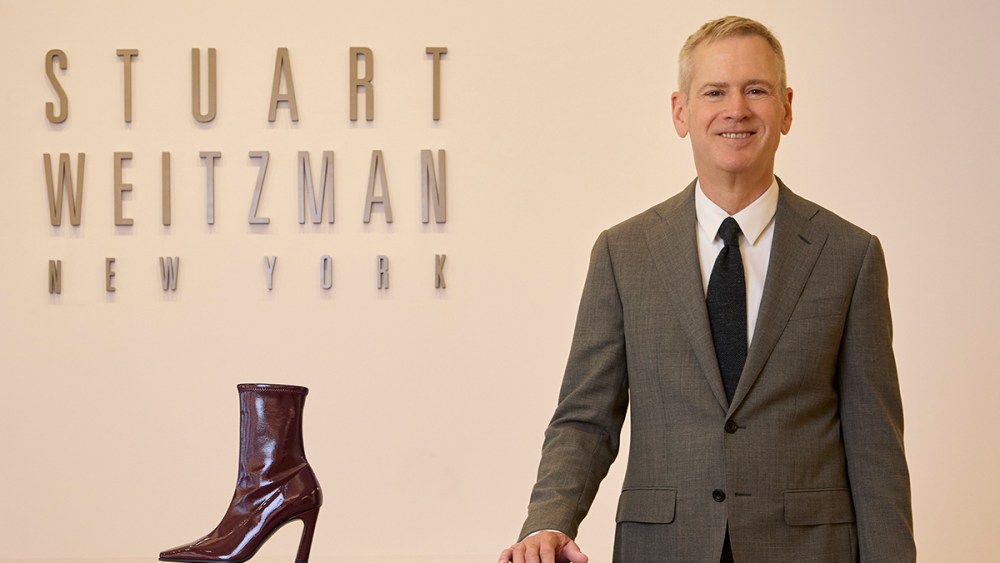
“To me, Stuart Weitzman made a perfect fit into our company,” said Caleres president and chief executive officer Jay Schmidt, in his first in-depth interview about the strategic rationale for the acquisition. “It is an iconic brand, has unique consumer relevance, and a long-standing position in the luxury fashion footwear market. So, for all those reasons, it’s not really just an add-on for us; the deal was more about taking a transformational step with Caleres and building a new globally recognized lead brand in our portfolio, and as an owned asset.”
You May Also Like
The CEO admitted that this wasn’t the first time Caleres has explored the option of acquiring the label. “It’s also worth noting, and kind of humorous in a way, that this is our third attempt in looking at Stuart Weitzman,” Schmidt explained. “We looked at it in past two sales when [former Caleres CEO] Diane [Sullivan] was here. We were not successful at that time, but I think our timing now is actually very good, because we’ve built an incredible amount of capability, structure and sourcing. We’ve really assembled a great team here to grow Stuart Weitzman.”
Stuart Weitzman also aligns with the company’s strategy to build its direct-to-consumer and international businesses. “In international, we were underpenetrated before this deal,” Schmidt described. “And about two thirds of the Stuart Weitzman business are direct-to-consumer and international, so when we brought in the brand, we increased our international penetration by about 50 percent.”
A large portion of Stuart Weitzman’s international business is done in China, where the brand operates wholly owned retail. This is new for Caleres, which operates a large Sam Edelman business in the country through a joint venture.
“It’s an interesting moment that we have two models working right now, so we’re really studying that very well,” the CEO said. “But I’m very pleased with what’s going on in China, as that’s the largest portion of our international business.”
Looking ahead, Schmidt feels there is opportunity to reinforce, reintroduce and expand the brand in the Middle East, which is a place that has “great opportunity long term for the business,” he noted.

Transition Mode
After Caleres closed the deal in August, the company spent six months working to move Stuart Weitzman’s operations over to established platforms in the St. Louis firm’s arsenal. “A major piece of that six-month transition was really trying to shed a lot of the inventory that had built up, and that was done fairly well as we reassembled a team both here and in Asia,” the CEO said.
Then, on the first day of the new quarter in February, the brand physically and digitally moved into Caleres. “When we did our big systems implementation, we also physically moved the team from Hudson Yards into a new showroom located in the same building as Sam Edelman,” Schmidt said. “We like that everyone’s close enough, but still, they maintain their own showroom. We want each brand to stand for itself. And we’re proud of the team here that really executed the transition, because it was on time, on budget, and it allowed us to really go forward with really minimal disruption.”
Changing of the Guard
As Caleres moved through old inventory, the company also made changes to the brand’s organizational structure to eliminate duplicative costs. The CEO explained that this entailed integrating the brand in the company’s sourcing, logistics, marketing, planning, costing, finance and other digital capabilities. “These are all functions that don’t really touch the consumer but really allow us some synergistic control and allow the brand to actually move faster,” he said.
On the product side, Schmidt noted that Caleres is focused on building out some of the assortment in Stuart Weitzman and strengthening the brand’s sourcing capabilities. The CEO noted that Caleres “remains committed” to Stuart Weitzman’s sourcing structure in Spain, which accounts for two-thirds of the business. But, as the company looks to expand categories, other manufacturing hubs will be explored.
“A good example would be sneakers. It’s something that Stuart Weitzman has never been successful in, and now we’ve started to make them in some of the best factories in Asia where we make our other premium brands,” Schmidt explained. “And guess what? The product is resonating with the consumer, particularly in Asia, but also in the United States. So, we’re going to continue to think about how to build out other categories of business, mostly in casual and sport leisure, in order to increase share of wallet with our customers.”
New Leadership
When Caleres acquired Stuart Weitzman in August, the company named Jonathan Lelonek as brand president. Lelonek has been a part of the brand since 2012 and was most recently senior vice president of global wholesale. Before Weitzman, he previously held senior roles in sales and merchandising at Prada, Salvatore Ferragamo and Paul Frank, bringing deep industry experience and a strong track record in luxury and contemporary footwear.
For Schmidt, Lelonek’s mandate from the start was to get Weitzman “on firm ground.”
“He also needed to make sure that the team is aligned and that this transition goes exceptionally well,” Schmidt said. “He has also been working with our retail partners and really determining where the brand shows up. He’s very involved in the product execution piece of it, which requires him to think more globally about everything. Overall though, I think he’s feeling very confident about the future.”
Financial Stability
In December, Schmidt told analysts on the company’s third-quarter conference call that he wanted to bring Stuart Weitzman to breakeven in 2026 and profitability thereafter. And as of now, the CEO is firm on his stance.
“I’ve committed to it and I’m not going backwards on it,” he said. “So that’s my story and I’m sticking to it. But the truth picks up on something that probably deserves some underscoring is that this year was just to stabilize volume, it wasn’t to grow. We also just really wanted to get the operating discipline, cost structure together and push very hard on the pieces of the business that are working, as we look to reignite other pieces.”
The CEO added that Caleres is a “long-term player” and he believes the company has made “nice progress” with Stuart Weitzman so far this year. “There’s no reason why we can’t break even this year,” Schmidt noted. “As I said, we’ve demonstrated it with multiple acquisitions, whether it’s our Vionic brand or Allen Edmonds brand.”

Long-term Ambitions
Schmidt noted that along with bringing the brand to a break-even position this year, he believes that Caleres can restore Stuart Weitzman to a profitable, globally relevant fashion player.
“Strengthening gross margin, improving inventory control, elevating the execution across all channels, and stabilizing international performance are all on the docket for this year,” the CEO confirmed. “Longer term, I firmly believe that Stuart Weitzman can return to growth and contribute operating margins comparable with the rest of our brand portfolio, and the growth is going to come from a more disciplined architecture and product, sharper storytelling, stronger digital execution improved, especially retail productivity, expanded international reach, and renewed wholesale partnerships with premium and luxury accounts, both here and across the globe.”
The executive added that he sees “meaningful brand extension opportunities” through licensing in the future. “We’ll have more to say as they develop, but mission critical right now is really to make sure that the footwear pieces is our primary focus, because obviously with the transition period you want to get everyone to stay focused. And as we celebrate the brand’s 40th anniversary later this year, it will give us an important opportunity to reintroduce Stuart Weitzman globally, celebrate its heritage, connect every single touch point and signal the next chapter.”