Taking as inspiration the wardrobes of the 1930s cultural elite in Shanghai, which embraced Western codes as the city was becoming a milieu of global connection, Uma Wang explored a crafty and languid nuance of the contemporary male wardrobe.
Rooted in a nomadic spirit that remixed references as far apart as traditional Chinese attire and the British tailoring heritage, the Shanghai-based designer conjured a soulful collection that oozed with whiffs of nostalgia.
A lived-in feel was echoed in the deconstructed qipao jackets – slouchy and tactile – worn with matching cargo pants, the garment-dyed workwear suits, lapel-less alpaca coats, and the vests with a utilitarian patch pocket at the back.
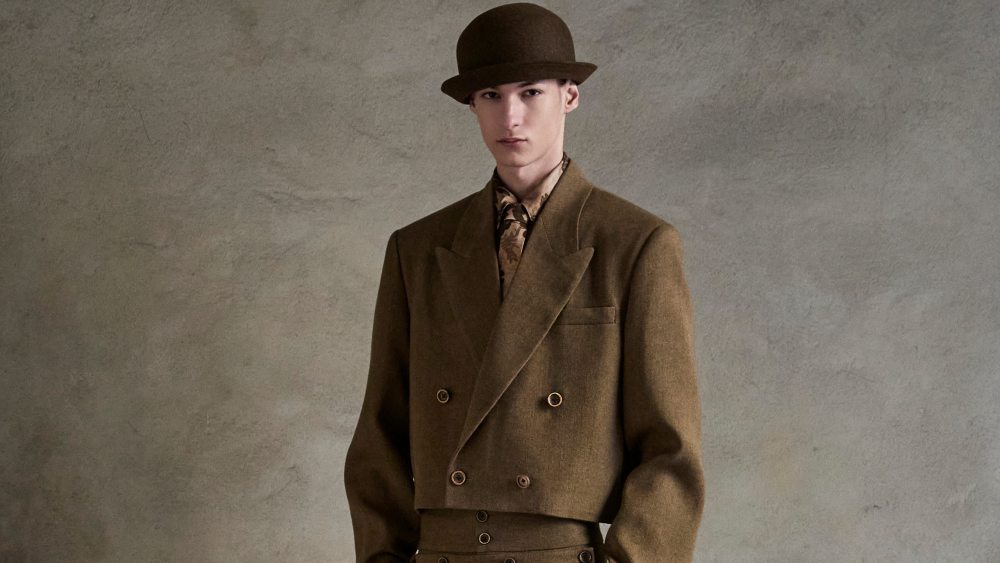
Oversized suits in boiled wool had a modern slant, save for the chalk-striped, double-breasted numbers with a cropped blazer that reminded one of the looks American trumpet player Buck Clayton wore during his years in Asia in the ‘30s.
You May Also Like
A handsome crop of outerwear pieces introduced inventive silhouettes, like the wool hooded bomber with outsized lapels fluttering on the front, the meaty leather jacket designed qipao-style, and a gabardine duster coat with extra volume at the back – bulky but still lightweight.
The latter was paired with matching carrot pants and top in a craft-intensive velvet and lurex jacquard with floral motifs that added an artisanal touch. Ditto for the textured, overstitched or fluffy cashmere knits.
Topped with bowler hats – the result of a partnership with the Swedish brand Horisaki – Wang’s lineup was a soothing exercise in rebooting century-old fashion codes with poetic sensibility.